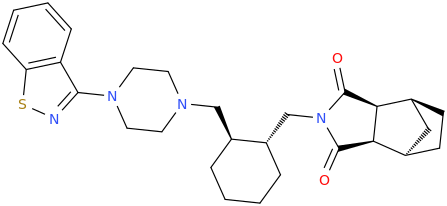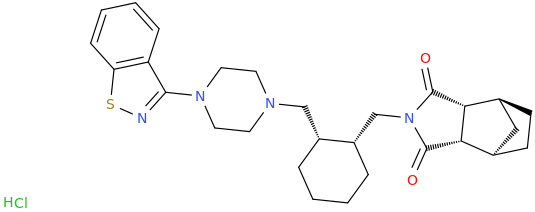
Ranitidine Impurity G is a thiazole-based synthetic byproduct arising from partial oxidation of the 2-furylmethyl side chain during ranitidine synthesis. It features a 4-(chloromethyl)thiazole core substituted with a dimethylamino group and a thiirane ring, resulting from an aberrant cyclization event. This impurity lacks the furan moiety of the parent drug, instead containing a chlorine atom at the ฮณ-position of the thiazole ring. Its structural divergence stems from premature termination of the alkylation step, yielding a stable, non-reactive chlorinated derivative. The compound serves as a critical HPLC reference standard for quantifying process-related impurities in ranitidine active pharmaceutical ingredient batches.
On RequestCN=C1/C(=N\O)/SCCN1.Cl
InChI=1S/C5H9N3OS.ClH/c1-6-4-5(8-9)10-3-2-7-4;/h9H,2-3H2,1H3,(H,6,7);1H/b8-5+;
XAOYCJOQYOBFFF-HAAWTFQLSA-N