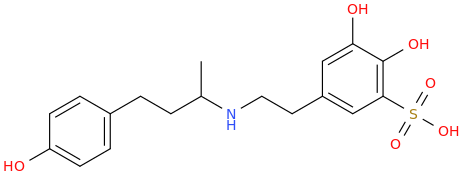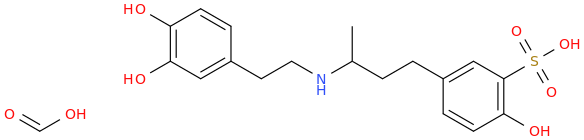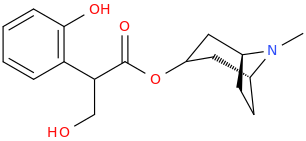

Ritonavir N acetyl impurity (Imp C) is a structurally related degradation byproduct derived from the acetylation of a primary amine in the Ritonavir scaffold. It features a substituted cyclohexane core with a sulfonamide moiety and an N-acetylated secondary amine, distinguishing it from the parent compound by the presence of an acetyl group at the nitrogen of the terminal piperazine ring. This impurity arises during synthetic processes due to side-chain acetylation under specific reaction conditions. Its precise application lies as a reference standard for HPLC-based quantification of process-related impurities in Ritonavir drug substance analysis.
On RequestCC(=O)N[C@@H](CC1=CC=CC=C1)C[C@@H]([C@H](CC2=CC=CC=C2)NC(=O)OCC3=CN=CS3)O
InChI=1S/C25H29N3O4S/c1-18(29)27-21(12-19-8-4-2-5-9-19)14-24(30)23(13-20-10-6-3-7-11-20)28-25(31)32-16-22-15-26-17-33-22/h2-11,15,17,21,23-24,30H,12-14,16H2,1H3,(H,27,29)(H,28,31)/t21-,23-,24-/m0/s1
LGKRKMCCXYIVTI-XWGVYQGASA-N